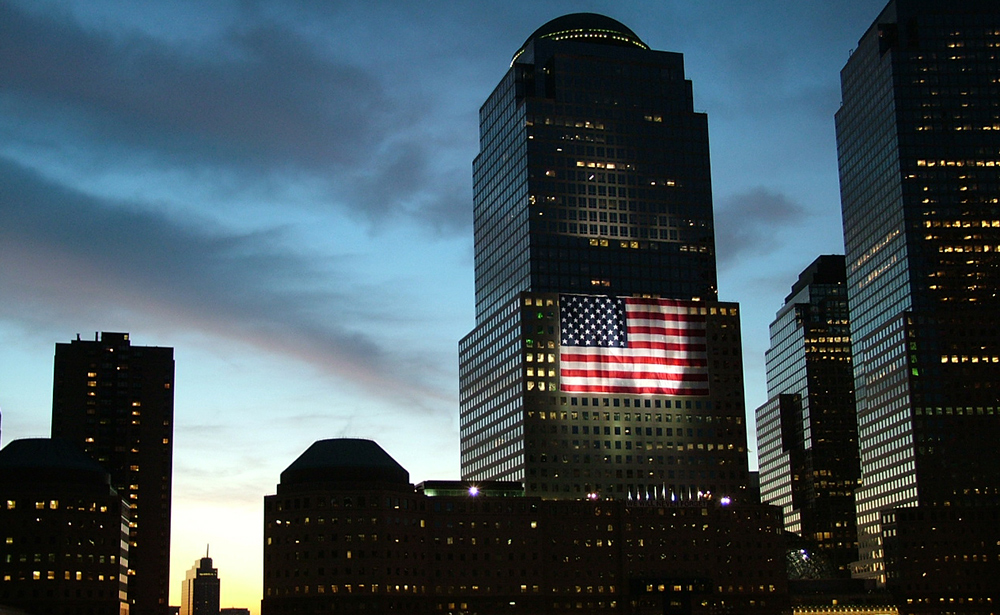
Niki Jones Agency is based in New York, founded by a New York City tactical patrol paramedic, and our entire team has roots here. While each of us was profoundly affected by the September 11th attacks in some way, none of us were on the ground in NYC that day.
In honor of the 25th Anniversary of 9/11, we thought it appropriate to hear the perspective of someone who was there. So our Founder & CEO Niki Jones reached out to her former tactical control paramedic partner, Lieutenant Steven Kanarian, to ask him to share his experience and reflection on the events of that day.
September 11, 2001 – The Day America Stood Still
Some moments in history make time seem to stop. The assassination of President John F. Kennedy was one. The explosion of the Space Shuttle Challenger was another. September 11, 2001, became one of those days.
People remember exactly where they were, what they were doing, and how they felt when the World Trade Center was attacked. It is a gut reaction that is never forgotten.
On September 11, 2001, I was a Lieutenant with the New York City Fire Department EMS Command, assigned to EMS Battalion 55. Like most Americans, I remember where I was, what I was doing and the feelings I had when I saw the World Trade Center burning and then watched the towers collapse.
I responded to the collapse of the World Trade Center as part of New York Task Force 1, FEMA Urban Search and Rescue.
As a Medical Specialist, I was responsible for caring for people trapped in collapsed buildings and for the team members conducting the search and rescue operation.
The collapse of the World Trade Center sent a shockwave around the world that still resonates today. The attacks, and the military actions, that followed changed the trajectory of our country and our world.
Honoring the Heroes of that Day
Thousands of people began September 11th believing it would be an ordinary Tuesday. People took trains to work at the World Trade Center and the Pentagon. Others boarded airplanes bound for other parts of the country.
They had no idea that many of them would never return home.
But amid the unimaginable destruction of that day, I witnessed firsthand some of the best parts of our country.
There were many heroes, from first responders to passersby. People of all backgrounds and professions stepped forward to help.
One of the first things I saw at the World Trade Center was people forming lines to pass wreckage and debris out of the pile as rescuers searched for survivors.
I remember an electrical worker wearing a union coat. As we passed debris, I asked him if he worked there.
“No.”
“Did someone send you here?”
“No.”
“Then what are you doing here?”
He stood a little straighter.
“My family built this building. My dad, my uncle and my grandfather built this building. This is part of my family.”
And he kept working.
As we moved debris and searched for survivors, another striking detail emerged. It seemed as though every piece of metal we picked up was painted either the red, white and yellow of an FDNY vehicle or the blue and white of an NYPD vehicle.
That was when the reality of who we were searching for began to sink in.
When the Massachusetts Urban Search and Rescue team went to work on the pile, their dogs began locating remains.
One police officer.
Then another.
Then a third.
This emergency was different than others I had worked, because this time, New York City’s first responders and emergency services were among the victims.
The Search for Loved Ones
As the days passed, the staggering loss became more apparent. Hundreds of photographs of missing people appeared on walls, bulletin boards and fences along the streets approaching the World Trade Center.
Families were still looking.
Still hoping.
Shoes recovered from Ground Zero, somehow separated from their owners, accumulated near St. Paul’s Chapel.
But as hope of finding survivors slowly diminished, something else was happening. Solidarity was growing in response to the tremendous loss.
People began lining West Street offering whatever they could: bottles of water, food, packages of Duracell batteries, encouragement and support.
Looking over the vast wreckage of the World Trade Center, I saw people moving debris bucket by bucket, passing those buckets down long lines of people.
All of this was happening while the rest of the country had nearly stopped. Flights were grounded. Schools and businesses were closed. Normal life came to a halt.
It felt as though the United States had gone flatline.
Yet at Ground Zero, people kept moving.
Bucket by bucket.
Step by step.
Day by day.
What We Should Take Away from 9/11
Looking back 25 years later, there are lessons from September 11 that I would want today’s young paramedics, firefighters and first responders to understand.
First, you have an obligation to yourself and to your family to seek the best training you can get. Develop different skills. Become well-rounded. And take responsibility for your own health and wellness.
Before September 11, I used to pack a sweatshirt, gloves, water, and snack bars in my turnout gear bag in case I got stuck on a long shift. I never imagined I might be at the scene of a disaster for days.
At Ground Zero, I showered at the Borough of Manhattan Community College and changed into whatever clean clothes I could obtain at the supply depots. We had been trained not to eat at the site of a building collapse or directly in front of an ambulance. At the medical tent, we washed our boots and left our turnout gear outside so we would not bring contaminants inside.
Those actions mattered.
My training mattered. My experience mattered. The varied skills of the members of my team mattered. So did intuition—the ability to recognize when something didn’t seem right and act before it became a problem.
Twenty-five years later, I understand something else.
Tomorrow is not guaranteed.
In the years following September 11, when co-workers complained about the job, I would sometimes tell them, “I know 343 guys who would trade places with you in a heartbeat and gladly take all your problems.”
September 11 changed the way I think about being alive.
We owe it to ourselves to live fully and appreciate the time we have. Love your family and your friends. Tell people what they mean to you. Speak up. Share your feelings. Do the things you keep telling yourself you’ll do someday.
Try not to leave important things unsaid.
None of the people who died on September 11 woke up that morning intending to become a hero or a victim. They were ordinary people going to work, boarding airplanes, serving their communities and living their lives when they were suddenly thrust into an international terrorist attack.
Some responded with extraordinary courage.
Some tried to help the person beside them.
Some simply tried to get home to the people they loved.
Perhaps one of the reasons September 11 continues to affect us so deeply is because we recognize something of ourselves in them.
Any one of us could have been on one of those airplanes.
Any one of us could have been sitting at a desk in the World Trade Center or walking through the Pentagon.
Any one of us could have been one of the first responders sent into those buildings.
Understanding the gravity of this truth gives us empathy for the people who experienced those final moments—and gratitude for the days we have been gifted since.
Twenty-five years have passed.
For those of us who were there, September 11 has never completely become history. We carry pieces of it with us.
I carry the people we lost.
I carry the faces of those searching for loved ones.
I carry the electrical worker who told me, with such pride, that his family had built those towers.
And I carry the memory of thousands of people who, at a moment when our country seemed to have stopped moving, stepped forward and asked what they could do.
On September 11, 2001, it felt as though the United States had gone flatline.
But I watched people begin to bring it back to life.
Bucket by bucket.
I-beam by I-beam.
Person by person.
Day by day.
About the Author
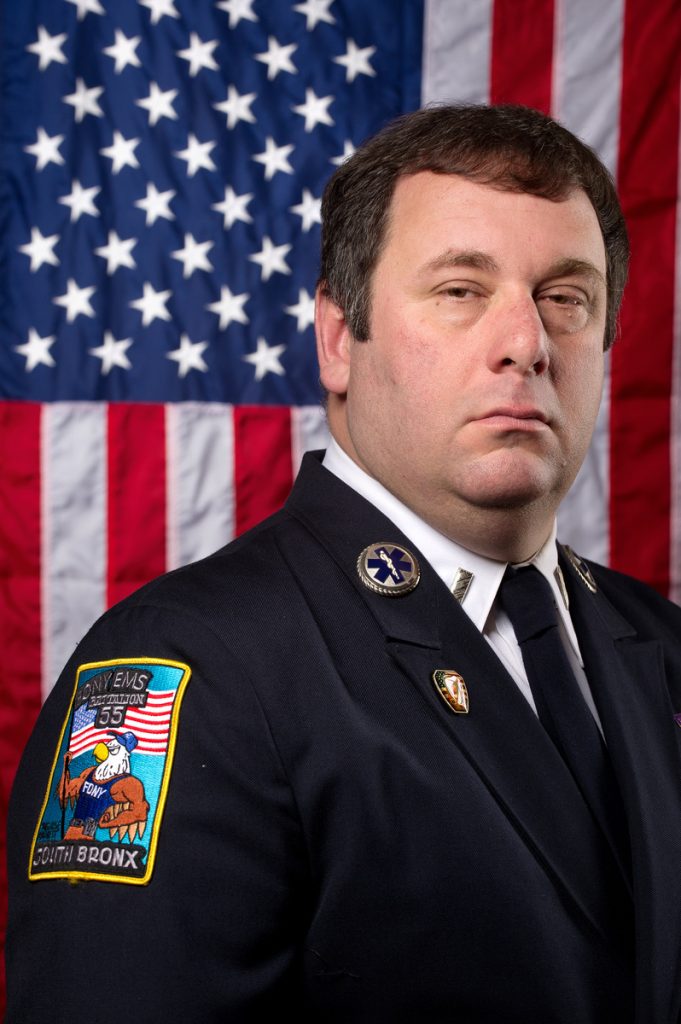
Lieutenant Steven Kanarian is a retired member of the Fire Department of New York, where he served for 25 years. A paramedic and former Medical Specialist with FEMA’s New York Task Force 1 Urban Search and Rescue Team, Lt. Kanarian responded to both attacks on the World Trade Center.
He is the author of The Downwind Walk: A USAR Paramedic’s Experience on September 11, 2001, an account of his experiences serving at Ground Zero in the aftermath of the attacks.
Steven is a father of three adult children and resides in Stony Point, New York. He is also a life coach and speaker.
Cover photo courtesy Sonia Callejas, MD.